
Key Lessons from Podia’s Success 🧑🏫
A “key lessons” report diving deep into how the course platform Podia achieved success in the competitive creator-economy market.
 Ayush Chaturvedi8 min read
Hello 👋
This is a “key lessons” report.
We are diving deep into how the course platform "Podia" has achieved success in the crowded space of the creator economy.
To read the story of how founder Spencer Fry built Podia, you can read it here -
How to capture the creator economy | Podia 🎨
In this post you will learn:
- How Podia managed to get 1.5M+ backlinks to boost its SEO.
- How Podia is beating 48 competitors with 1 strategy.
- How Podia's founder Spencer Fry achieved “Founder Market Fit”?
- And how you can enter the “online course economy”.
You will also learn the following key lessons:
- Growth Strategies📈
- Actionable Insights📊
- Traffic Channels🔢
- Landing Page Lessons📃
- Related Trends and Opportunities💸
Let's go 👇
Growth Strategies📈
Content Marketing and SEO
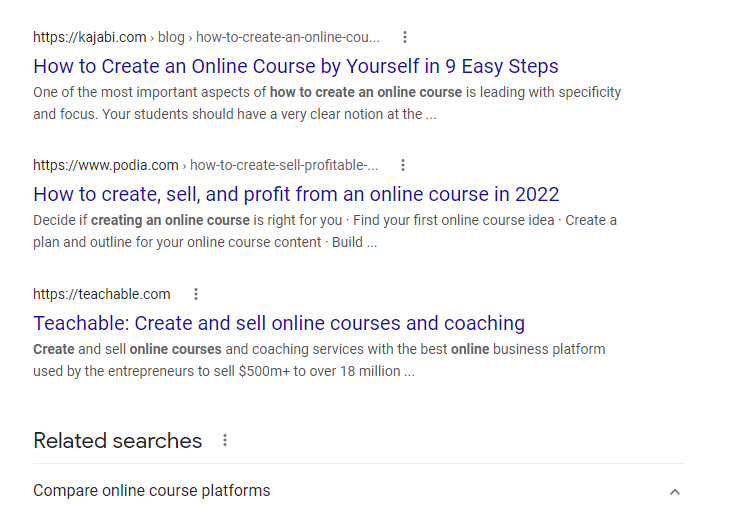
- Podia has invested heavily in their blog and YouTube channel. One of their blog posts comes in the top 10 when you search “How to create an online course” on Google.
- It’s not at the top, something they can improve upon. But top 10 is good because anyone looking to start an online course would try out different options before committing.
- Podia is at number 8, sandwiched between 2 of its top competitors.
Alternative pages
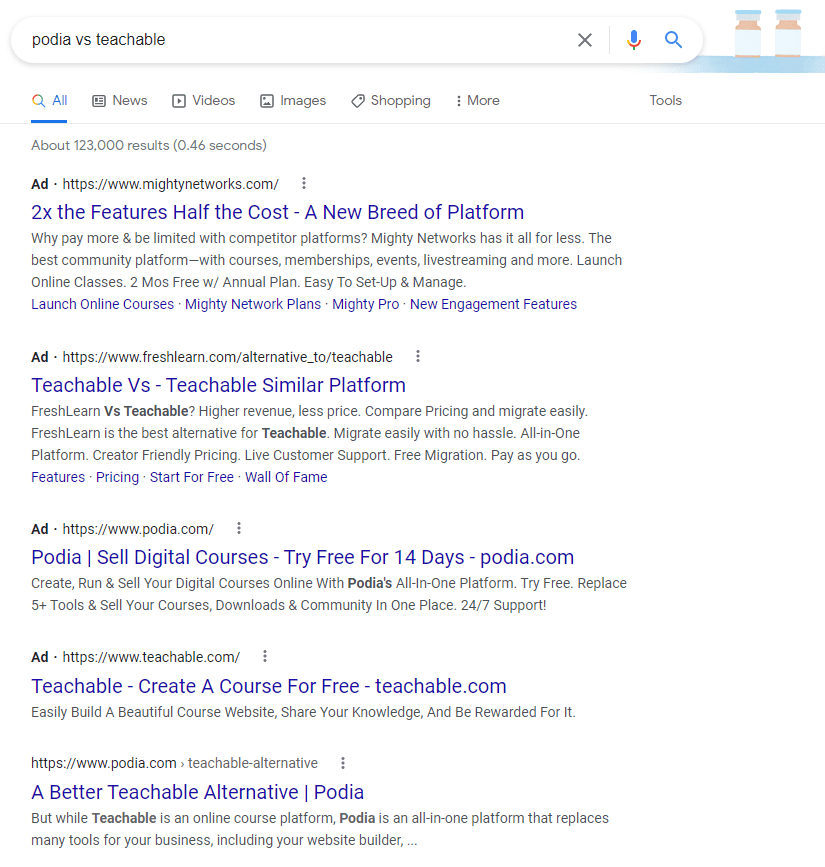
Podia has a comprehensive “alternatives” page. With in-depth content and comparison. This helps with SEO because when someone wants to compare course platforms they are more likely to land on one of Podia’s pages as compared to their competitors.
When you search for “Podia vs Teachable”, the first organic result you see is a page from Podia. There are 4 ads for those keywords which means this is a highly competitive query.
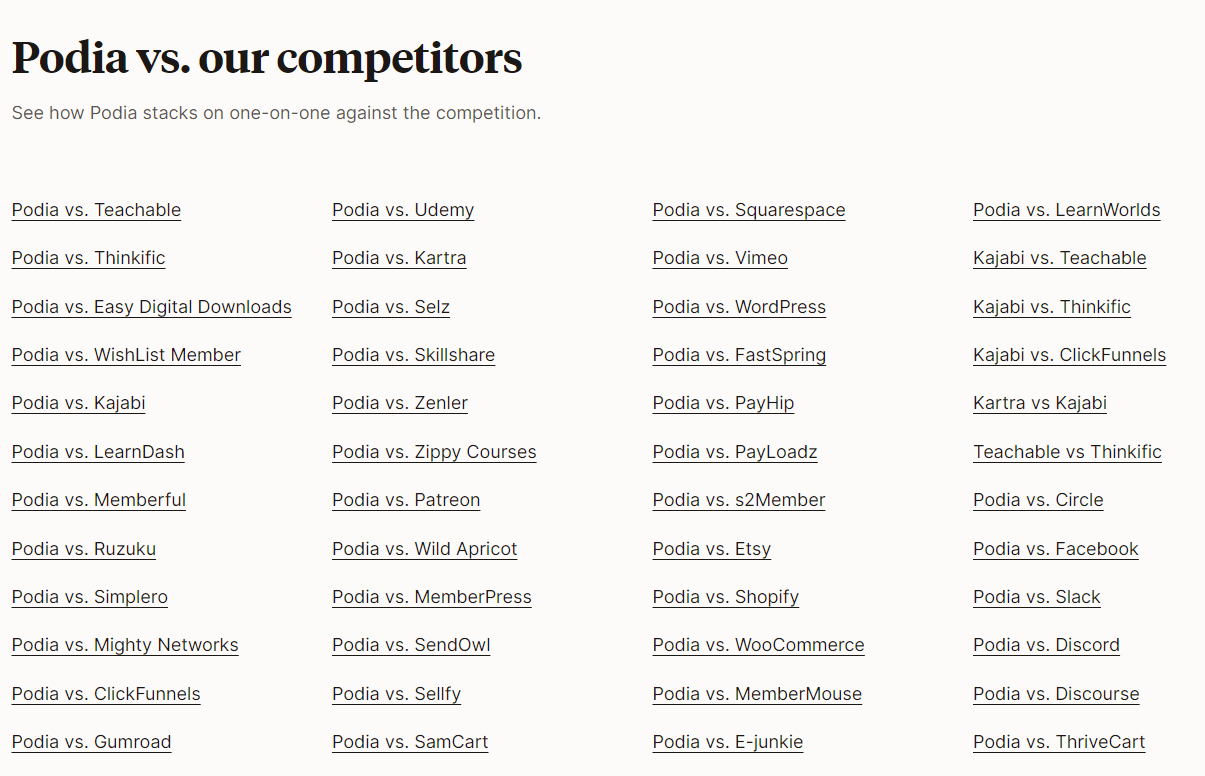
These are all the “alternative pages” on the Podia blog:
These are 48 unique pages optimized for SEO, and that rank at the top whenever a user searches for a Podia alternative.
Product Led Growth
- For its base plan users, Podia displays a page at the bottom that links back to Podia with the text - “Powered by Podia”. This is good for word-of-mouth marketing as well as SEO.
- Also, the terms and conditions pages of all courses created using Podia link back to it, resulting in even more backlinks and strengthening its domain authority.
- Referral Program - Podia runs an affiliate program for its creators which brings in even more users and backlinks.
- One of Podia’s power users is YouTuber Ali Abdaal who runs his course called Part-Time YouTuber Academy on Podia. And often links to Podia from his videos and Tweets.
Ali Abdaal
@AliAbdaal
of course mate, podia’s great, been using it for 3 years (as you know). if anyone’s reading this and needs a course platform, hit up https://t.co/7GHDReAwhM 😉View on X →
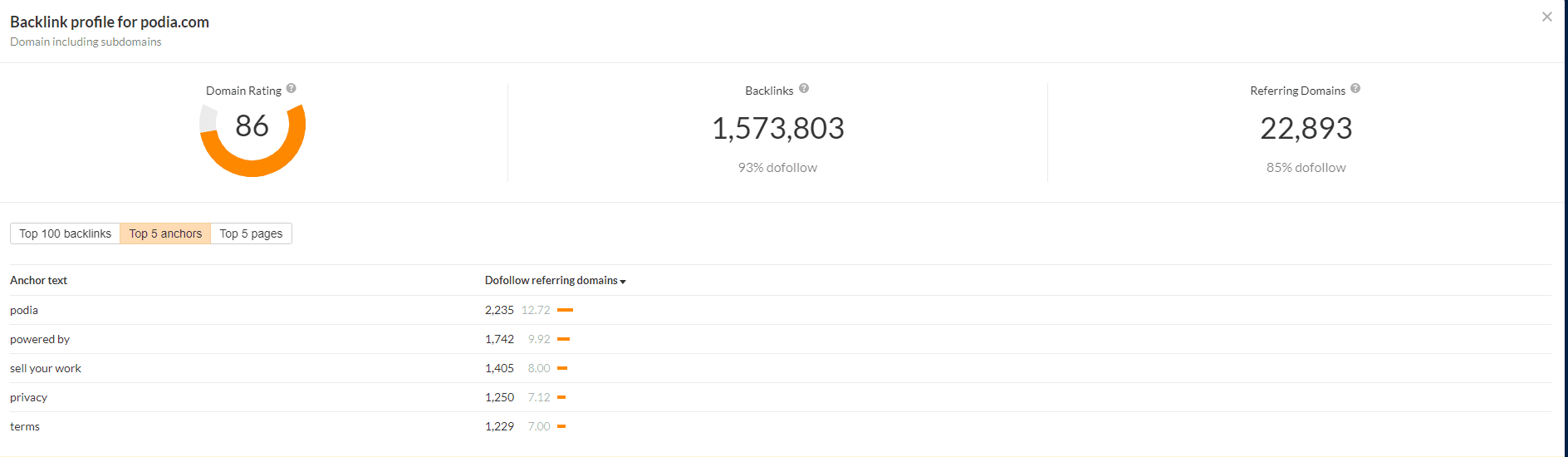
These 3 strategies combined have resulted in over 1.5M+ backlinks for Podia.
Podia’s backlink report from Ahrefs:
Note the anchor text of the backlinks - "podia", "powered by", "sell your work", "privacy", "terms".
Actionable Insights📊
- Founder Market Fit. Spencer didn’t want to deal with enterprise customers, he preferred dealing with individuals, that’s why he made a tool for individuals.
- Start small - Your MVP should solve a specific problem for a specific user. Keep iterating from there based on user feedback.
- Talk to customers - Speaking to users is key, at least for your 1st 100 users. And ask them questions that pass the mom test.
- Content marketing and SEO are more important than Social shares for SaaS tools.
- Social is more important for marketplaces and consumer products. Veed also grew explosively through content marketing and SEO.
- Invest in getting early creators onboard. Ali Abdaal was using Podia before he was so famous. So when it came time to launch his most popular course, Podia was his natural choice.
- Everyone has a course in them. Everyone can teach something to a 1 year younger version of themselves.
- The course economy is a subset of the creator economy and will only grow bigger with time. Listen to this IH podcast - Every Indie Hacker Has an Online Course In Them
- Help course creators in 3 ways:
- Give them the tools to teach (like Podia)
- Or give them distribution (like Udemy)
- Or give them both (like Maven)
- Target a specific kind of course teacher, like Slip.so helps developers make courses. Maybe target designers, how can they teach design to their audience?
- (Related - I wrote about unbundling Udemy in this report for Indie Opportunities - unbundlings)
- Teach a course yourself. Your knowledge is valuable, find a way to structure it in an actionable manner and sell it as a self-paced course.
- Charge a premium for a cohort base course and a community.
- Watch this video to learn how to structure your course - Create Your Online Course Template
Traffic Channels 🔢
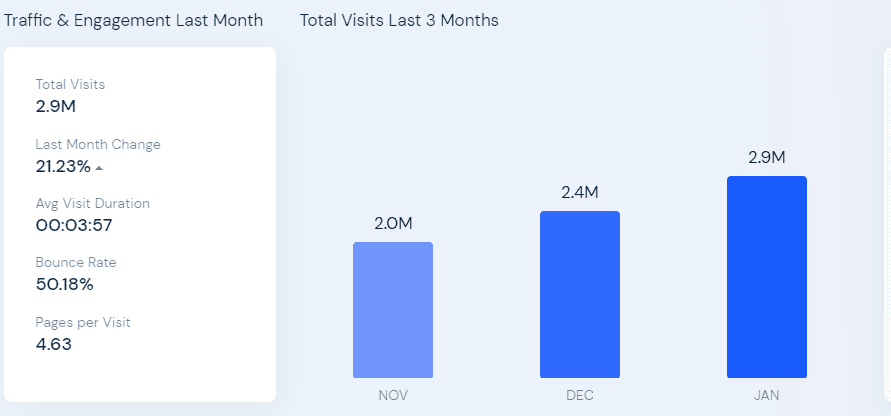
Podia’s traffic channels directly relate to its Growth Strategies.
It gets 2.9M visits a month-
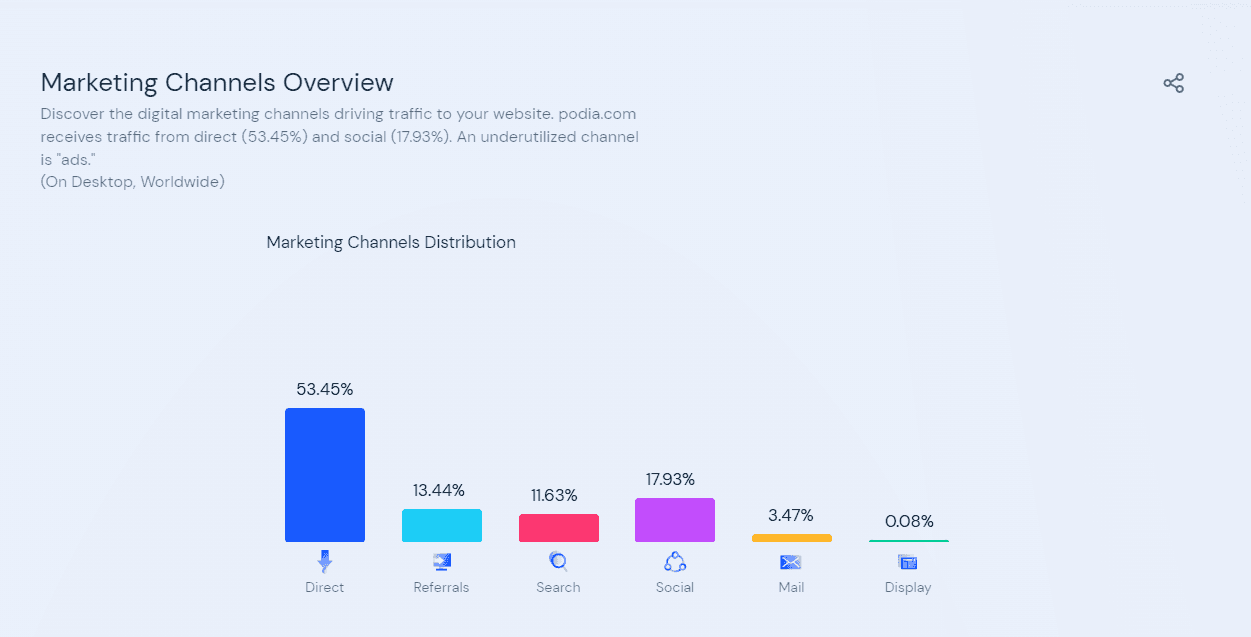
Channels breakdown -
- 53% Direct
- 13% Referral
- 11% Search
- 18% Social
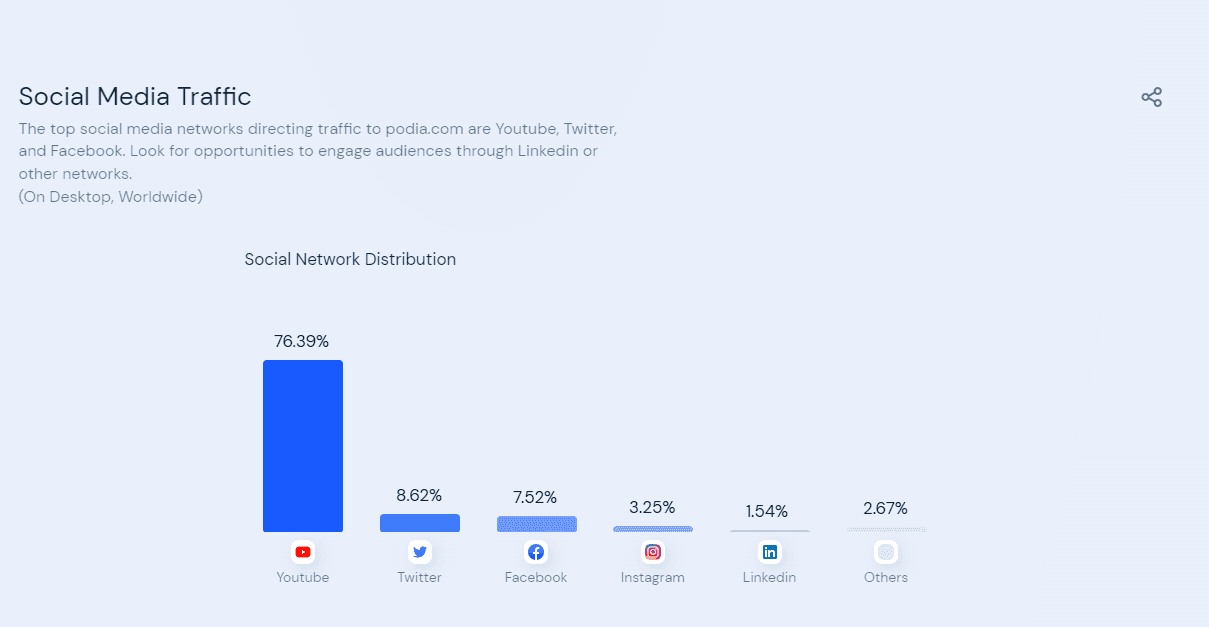
Social Media Traffic breakdown -
- 76% YouTube (Mostly from Podia’s channel and from channels of it’s users like Ali Abdaal)
- 8.6% Twitter
- 7.52% Facebook
Landing Page Lessons📃
From Podia’s landing page - podia.com
- A perfect headline that captures their entire offering - “Everything you need to sell courses, webinars, downloads, and community.”
- Big blue CTA button - “Get started for free”
- Below the fold, they share more details - A subheading that says “Sell your work” and then the 4 primary features are explained.
- Then there is a big picture and profile of their most successful creator - John Suanders and how “he made $200K+ after switching to Podia”
- The big focus of John’s story is to attract people who are already selling on Udemy but losing 75% of their revenue to platform fees. The keyword there is “switching”. *(Read John’s lessons in this Twitter thread*)
- Podia is not for 1st-time creators, it’s not competing with Gumroad, it’s competing with Udemy, so the copy needs to reflect that.
- As we scroll down, there is 1 more creator profile and the emphasis on “saving $1200/year” with Podia.”
- Secondary level features are explained with a subheading - “Market your work”
- Then there’s social proof, reviews from people.
- There’s a section about 24/7 support. And weekly Q&As and Demos. Podia’s starter plan is at a hefty $39/month. When someone pays that much they expect good support.
- Then at the bottom, there’s a headline that emphasizes the number of users already using Podia - “Join 50,000+ creators”
- They explain the 14-day free trial and show the final CTA button - “Start Free Trial”
Related Trends and Opportunities💸
Build something that people search for.
- Find the courses that people are searching on Google and figure out how those courses are delivered right now.
- Build a SaaS tool only focused on that 1 type of course creator. (like Slip.so is doing for coding)
- Or build a content site that curates information about a particular niche of the courses people are searching for.
These are Google’s autocomplete results for the query “online course for..”
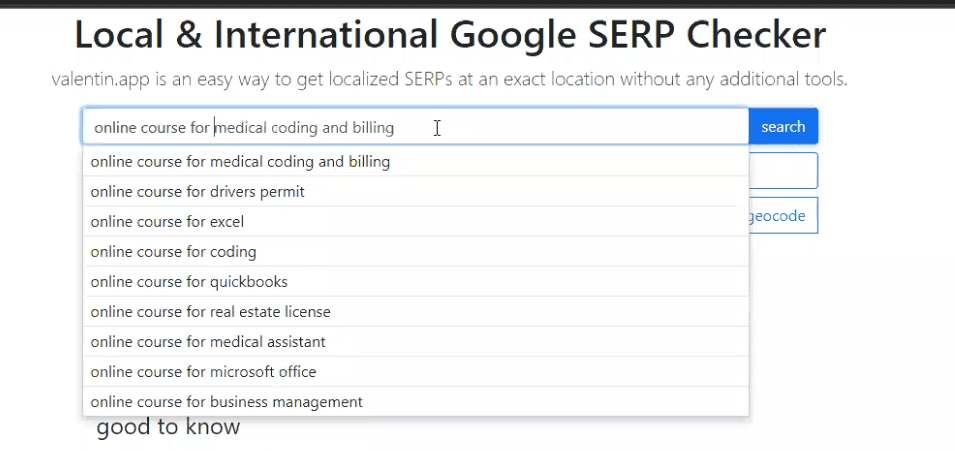
- These are all different niches that can be tapped.
- All of these course topics help people make money, and the search results are heavily loaded with ads.
- This means there’s money to be made in these niches.
- (PS: These results are for the US, you can use valentin.app to replicate Google search results in any country)
Offer a course publishing productized service to creators.
- Publish and list their content on every course platform available. Follow best practices.
- This is a real pain, most recently Arvid Kahl is facing issues uploading subtitles on SkillShare.
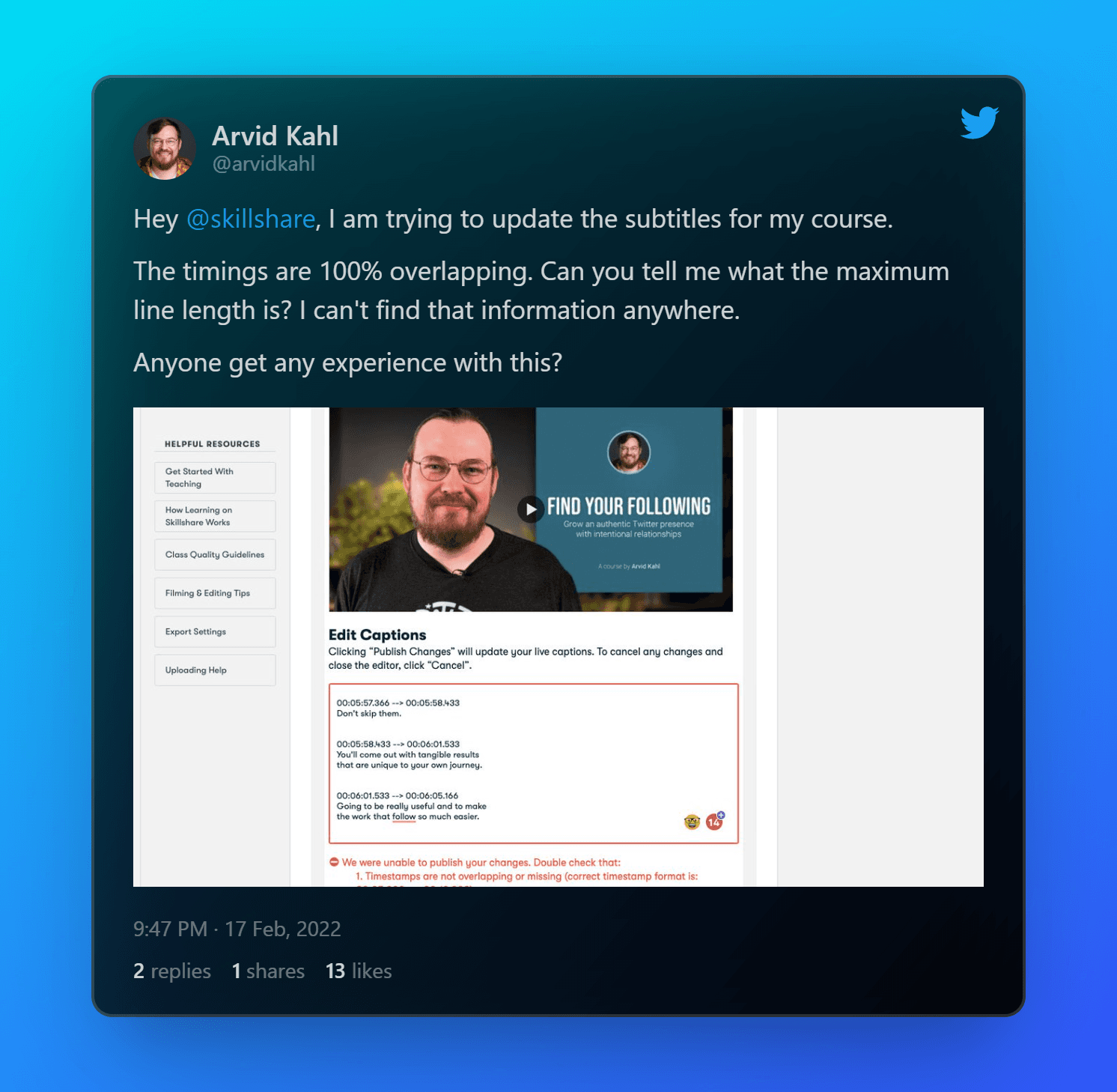
- A lot goes into creating and publishing a course. Most admin tasks are painful for creators.
- Solve that pain for them. Be a painkiller 💊
Related Links 🔗
- The future of the creator economy: 10 bold predictions for the next 10 years | Podia Blog
- Podia's hub of competitor comparison pages | Marketing Examples
- Podia Growth Strategies | Growth Ramp
- A Step-by-Step Guide to User Research | Spencer Fry
- Keys to creating a quality online course | Twitter thread from John Saunders (Podia’s number 1 course creator)
- Hard-Learned Lessons from Decades of Entrepreneurship with Spencer Fry of Podia | Indie Hackers podcast #233
- 4x founder, 3 exits — currently building Podia, an OG in the creator economy since 2014, AMA! | Spencer’s Indie Hackers AMA
Useful Tweets 🦉
- 64 tools to run a SaaS business | Spencer Fry
- Why Free plans are bad | Spencer Fry
- Mass acceleration of the creator economy | Spencer Fry
Thank you for reading 🙏
You can read the story of how Spencer Fry started and built Podia in the related free post that will come out later today.
I hope you found value in this post, would love to get some feedback about the newsletter from you.
If you have 2 minutes please answer these 3 simple questions.
This will help me make this newsletter even more valuable for you.
I'm most curious to know which section adds the most value to you so that I can double down on it.
Cheers,
Ayush