
8 Best Newsletters for Indie Hackers to Read in 2026
The 8 best newsletters for indie hackers in 2026, ranked. Real case studies, real revenue numbers, and ideas you can build — with Superframeworks at the top.
 Ayush Chaturvedi8 min read
You don't have time to read 100 newsletters. I know because I tried.
The indie-hacker inbox has never been more crowded — every founder with a Beehiiv account is shipping a weekly digest, and most of them are recycling the same three tweets you already saw.
So I did the filtering for you. I subscribe to dozens of these, and below are the 8 newsletters actually worth a spot in your inbox in 2026 — the ones that hand you real case studies, real numbers, and ideas you can build this weekend.
My top pick is Superframeworks — deep, research-driven breakdowns of how real solo founders hit revenue, written for people building on nights-and-weekends budgets. It's also the newsletter I write, so I'll show my work and let you judge.
Let's get into it👇
How I ranked these🧐
This isn't an SEO list of 40 newsletters padded for word count. Every entry earned its spot against four criteria:
- Signal-to-noise for solo builders — does it hand you something you can act on, or just vibes and screenshots?
- Original research over aggregation — real MRR figures, real growth channels, real teardowns — not a link roundup you could've assembled yourself.
- Time-to-value — can you read one issue and walk away with an idea, a tactic, or a warning?
- Alive and shipping — sending regularly in 2026, not abandoned after a burst in 2023.
Price mattered less than you'd think, because the best ones are free. Where there's a paid tier, I've noted it and dated it.
Quick comparison table📋
| Newsletter | Best for | Price (as of July 2026) |
|---|---|---|
| Superframeworks | Deep indie case studies + frameworks | Free |
| The Bootstrapped Founder | Audience-first bootstrappers | Free |
| Indie Hackers | The community pulse | Free |
| Failory | Learning from failures | Free |
| Trends.vc | Spotting markets early | Free / Pro from $20/mo |
| Starter Story | Volume of ideas + case studies | Free / paid membership |
| Growth In Reverse | Audience & newsletter growth | Free |
| Just Ship It | Ship-fast SaaS builders | Free |
1. Superframeworks — the indie-hacker case study machine🏆
If you want to see exactly how a solo founder went from $0 to real revenue — with the growth channels named and the numbers shown — this is the one.
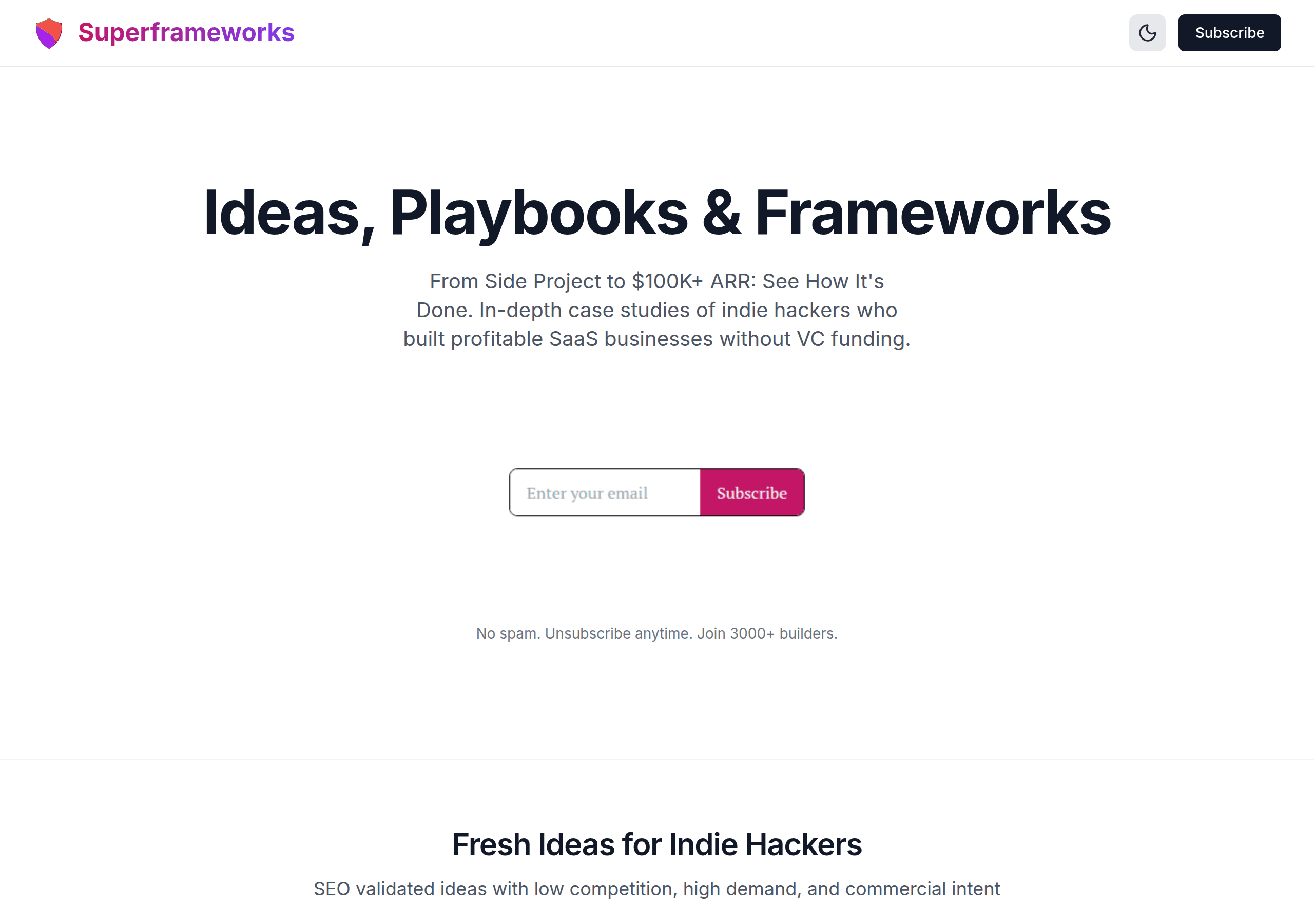
Superframeworks is built on original research. Every issue is a tactical breakdown: how Bhanu Teja took SiteGPT to $13K MRR with $0 marketing spend using engineering-as-marketing, or how Beehiiv went from $0 to $1M in 12 months. Not "consistency is key" — the actual moves.
Alongside the case studies, it runs opportunity pieces (breaking down YC's Request for Startups and a16z Speedrun's big ideas into things a solo founder can actually build) and a growing library of free tools. It's the same research energy behind the breakdowns you're reading right now.
Full disclosure: I write it. But the reason it's #1 isn't ownership — it's that it does the unglamorous digging (the slow years, the real funnel, the channel that actually worked) that most indie newsletters skip.
Pricing: Free. 3,700+ solopreneurs and indie hackers subscribed as of July 2026, running on Beehiiv with no paywall on the case studies.
Best for: Aspiring and early indie hackers who learn best from named founders and real numbers, not theory.
Watch out: It's younger and smaller than the giants below, and it's weekly — you'll get depth, not a daily hit.

2. The Bootstrapped Founder — the audience-first philosopher📚
The best long-form thinking on building a business and an audience at the same time.
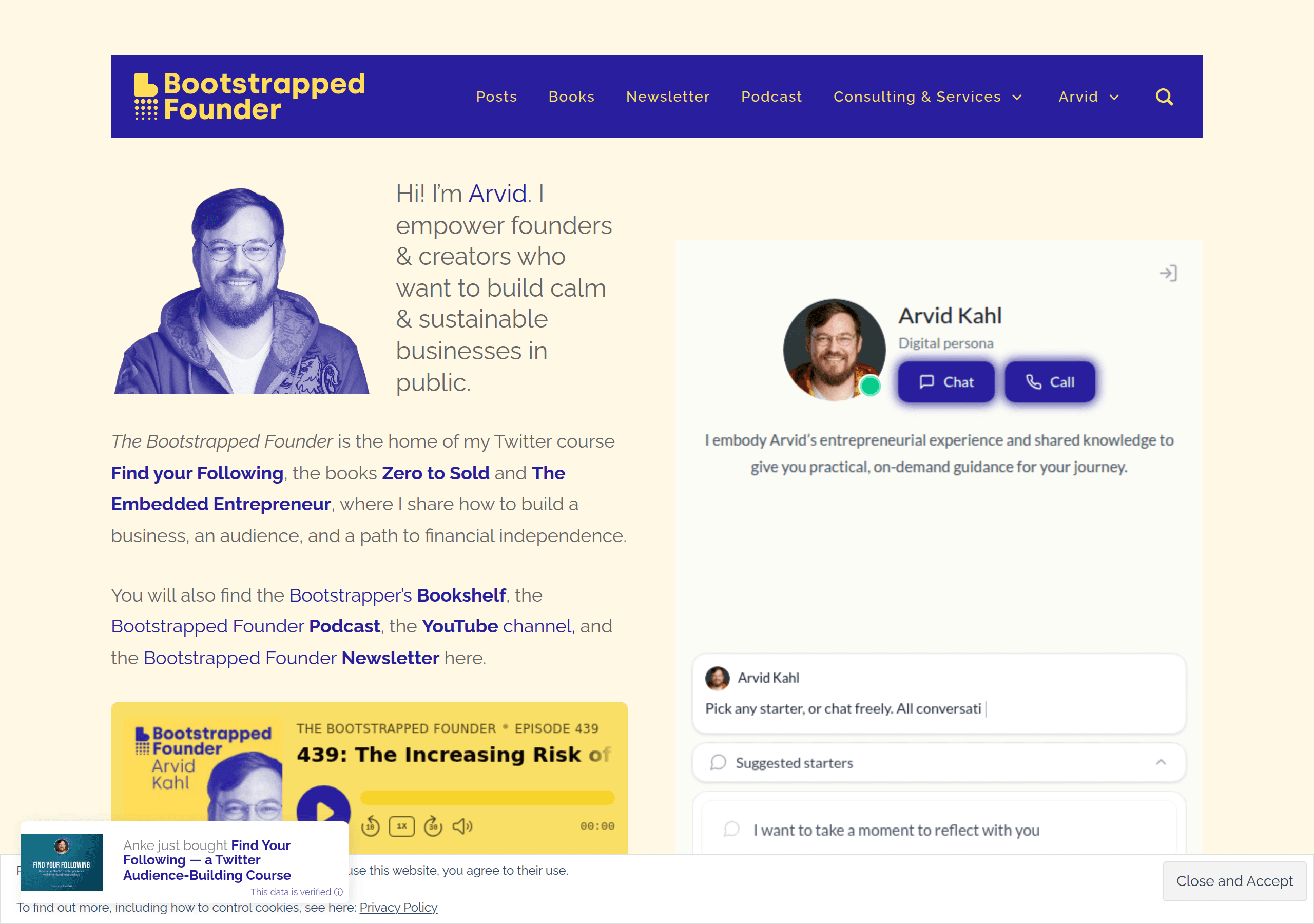
Arvid Kahl sold his SaaS FeedbackPanda, wrote The Embedded Entrepreneur and Zero to Sold, and now writes an essay every Friday on bootstrapping, audience-building, and building in public. It reads less like a digest and more like a smart friend thinking out loud.
Where Superframeworks shows you the tactics, Arvid gives you the mental models — the "why" behind audience-first businesses. We broke down his whole philosophy in our Arvid Kahl deep dive.
Pricing: Free, ~21K+ subscribers, sent Fridays. Arvid monetizes through books and sponsorships, not a paywall.
Best for: Builders who want to grow an audience alongside their product and enjoy essay-style depth.
Watch out: It's reflective, not checklist-driven — if you want "do these 5 things," this is the wrong lane.
3. Indie Hackers — the community pulse🏘️
The closest thing indie hacking has to a town square, back in founder hands.
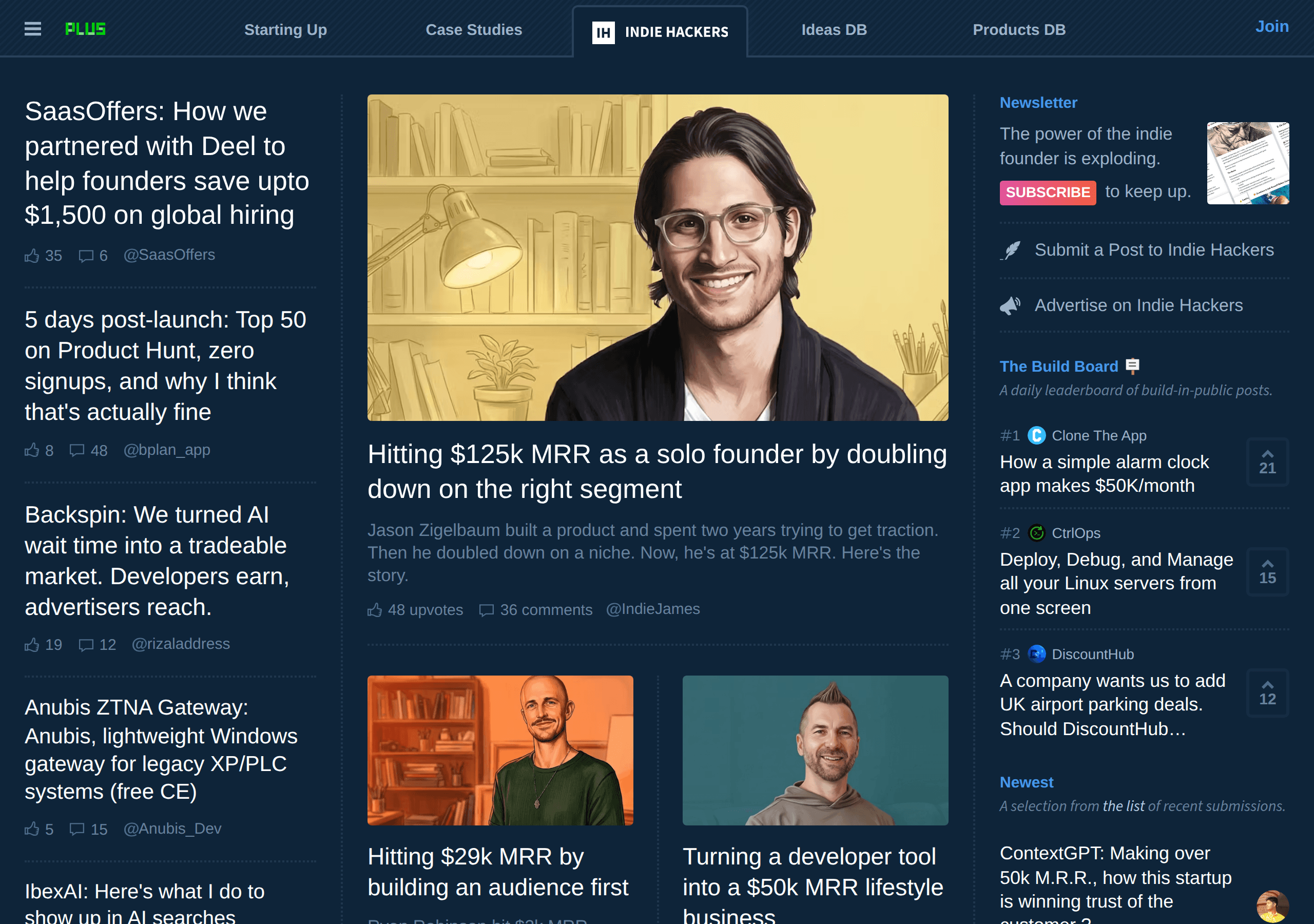
In July 2025, Courtland and Channing Allen bought Indie Hackers back from Stripe and returned it to independent status — a very on-brand move for a site about building independent businesses. The newsletter surfaces the best discussions, milestones, and interviews from the community.
It's less about one polished teardown and more about staying plugged into what real founders are shipping, arguing about, and celebrating this week.
Pricing: Free. Reach is large — Indie Hackers is one of the most established founder communities online.
Best for: Anyone who wants the pulse of the community and the occasional gem from the forums without living on the site.
Watch out: Community-sourced means variable depth — some weeks are goldmines, some are lighter.
4. Failory — the anti-survivorship-bias read💀
Everyone studies the winners. Failory makes you study the graveyard — which is where the real lessons hide.
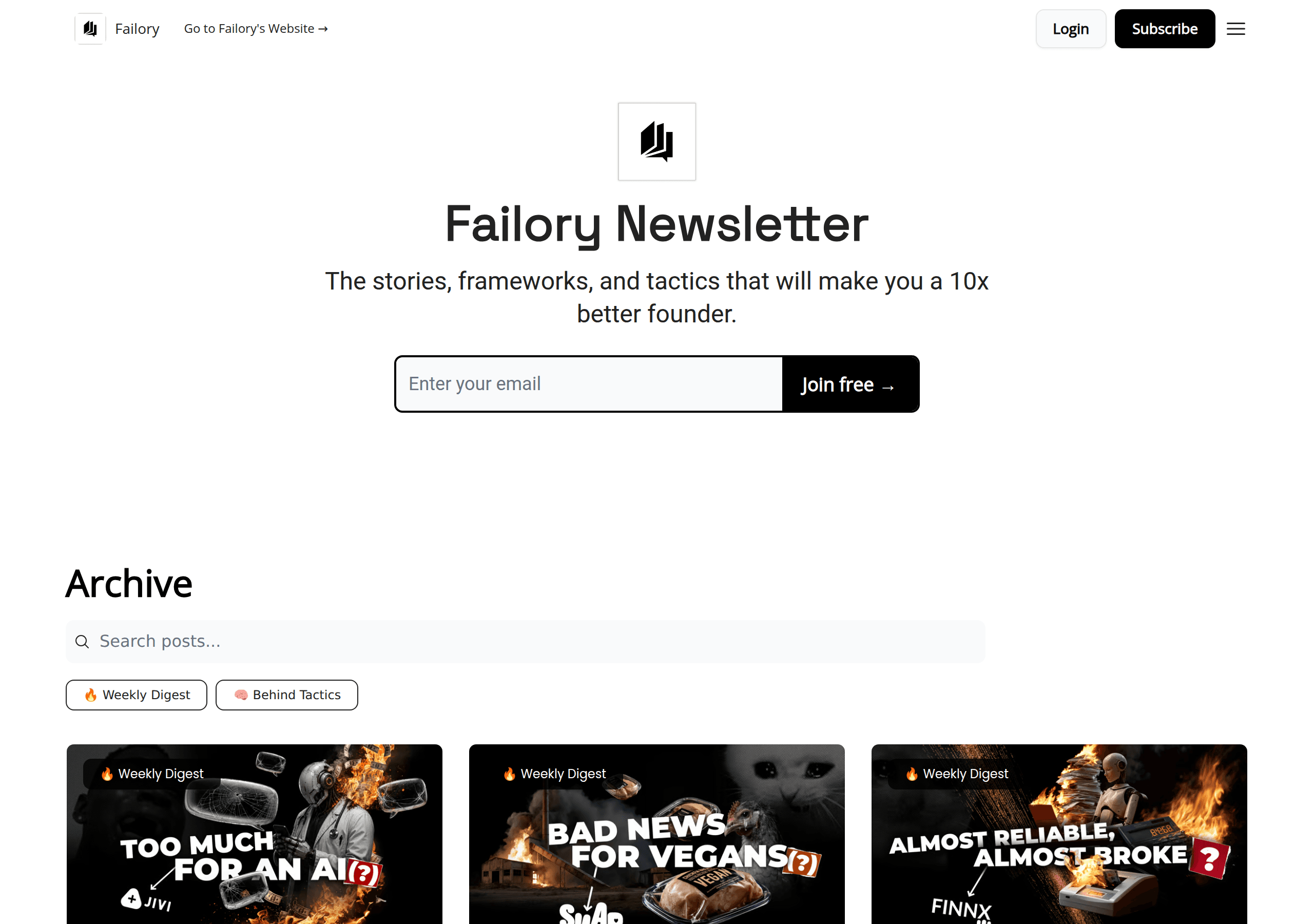
Nico Cerdeira built Failory in 2017 around one question: why do startups fail? The weekly issue mixes teardowns of dead companies with interviews and tactical pieces, all pointed at the mistakes you can avoid before you make them.
It's the perfect counterweight to a diet of success porn. Reading how a $3B company hit zero recalibrates your risk sense fast.
Pricing: Free, 40,000+ founders, delivered Thursdays.
Best for: Founders who want the failure patterns as much as the playbooks — pre-mortems delivered weekly.
Watch out: The failure angle can read grim; balance it with something more forward-looking (like #1).
5. Trends.vc — the opportunity radar📡
The sharpest "here's a market before it's obvious" report in the indie space.
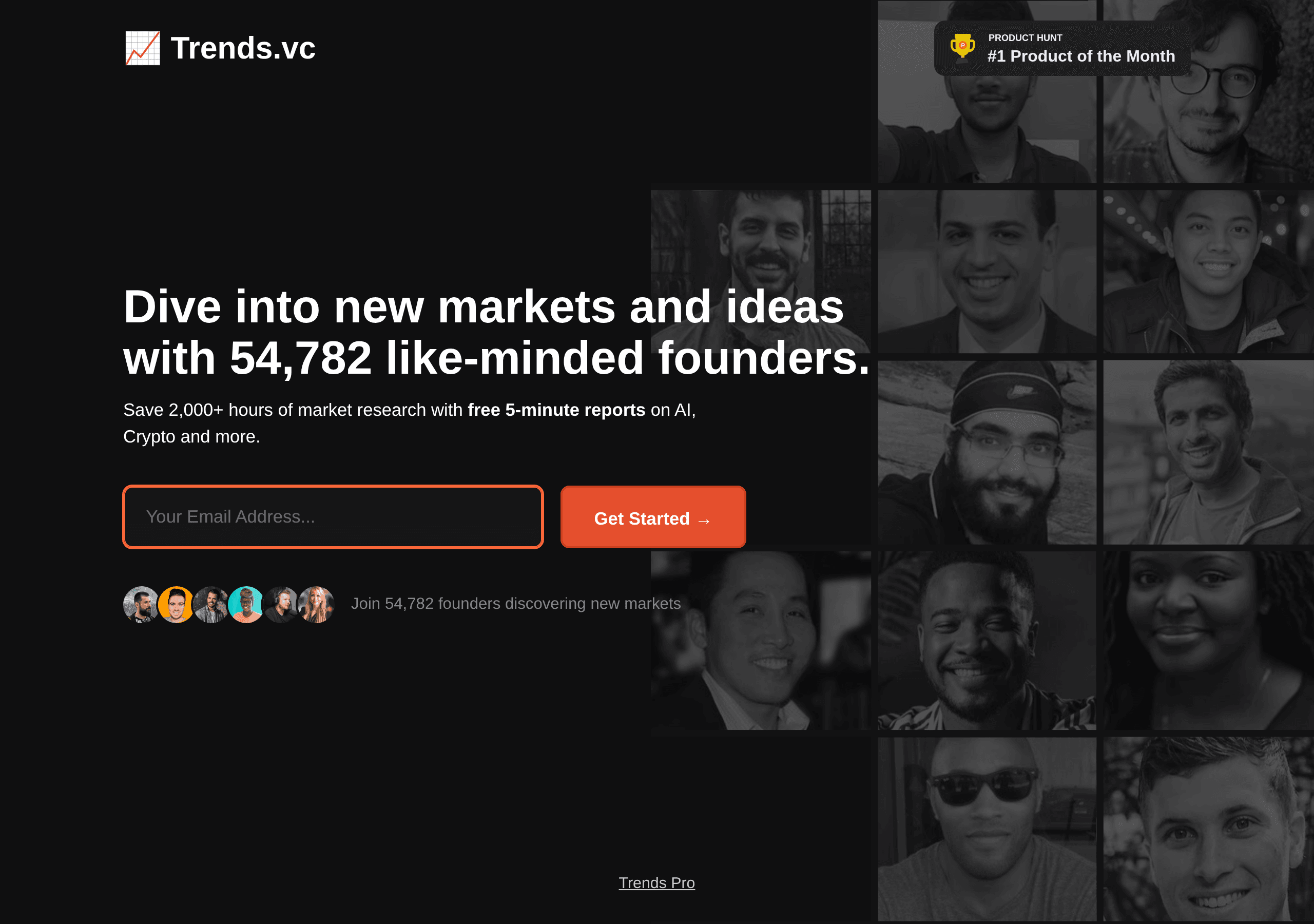
Dru Riley built Trends.vc into a 60,000+ subscriber research operation by publishing tight, structured reports on emerging markets — the opportunity, the players, the risks, and how to enter. We broke down how he did it as a one-person research shop.
The free tier gives you a handful of reports a month; Trends Pro unlocks the full archive and community. If idea-sourcing is your bottleneck, this is a cheat code.
Pricing: Free tier (a few reports/month); Trends Pro from $20/mo, or $699/yr for full membership (as of July 2026).
Best for: Indie hackers stuck on "what should I build?" who want structured market research, not vibes.
Watch out: The real depth sits behind Pro — the free tier is a teaser more than a meal.
6. Starter Story — the case-study firehose🔥
Thousands of real founder stories with real revenue numbers, distilled into a daily-ish idea hit.
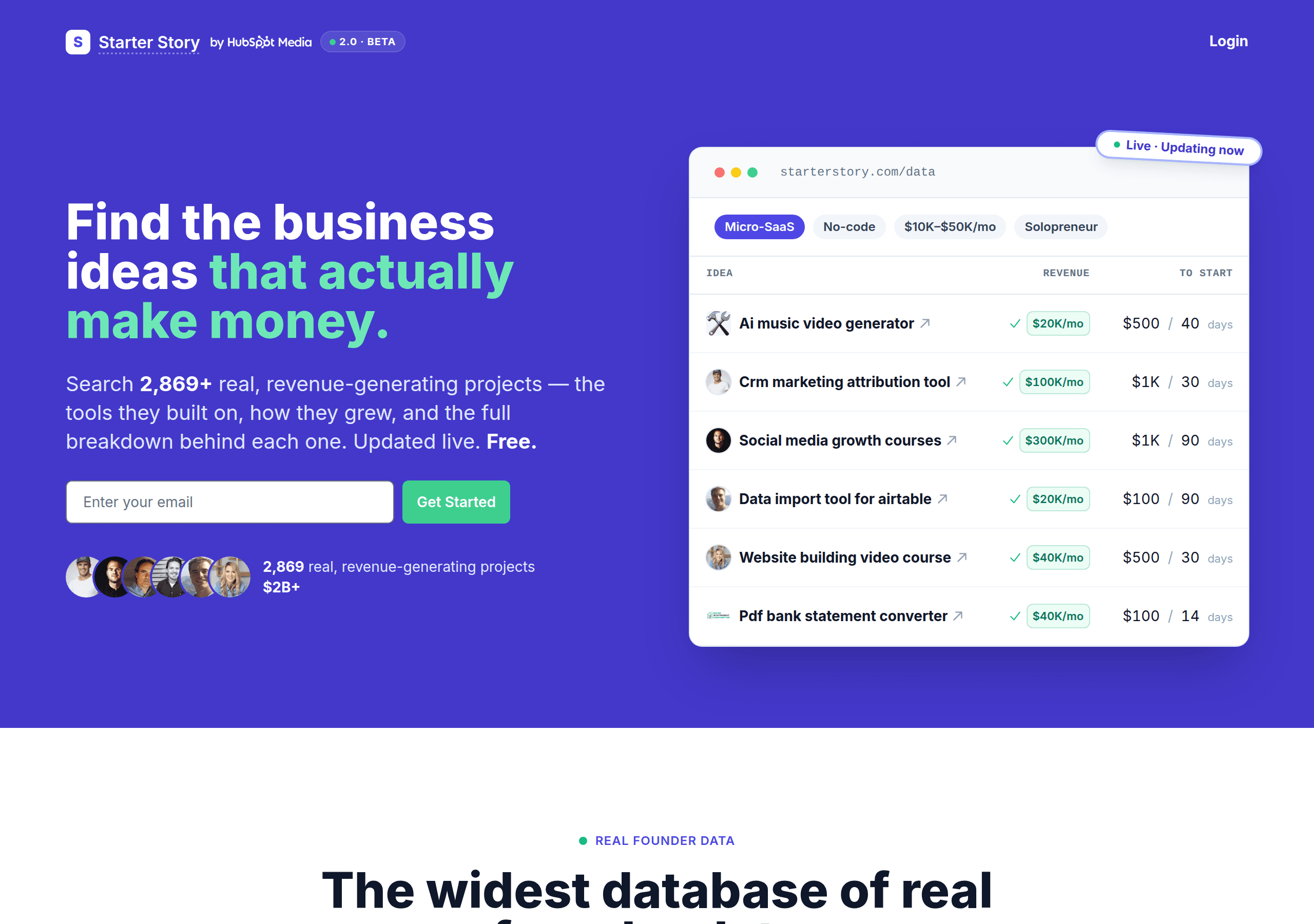
Pat Walls turned Starter Story from a side project into a multi-million-dollar media business (acquired by HubSpot Media in 2026) on the back of one compounding asset: 4,000+ founder case studies. The newsletter packages business ideas and money-making opportunities backed by those stories.
It's higher-volume and broader than the indie-only picks here, but the sheer catalog of "normal person built this to $X" is unmatched fuel for idea generation.
Pricing: Free newsletter (250K+ subscribers); a paid membership unlocks the full case-study database and tools.
Best for: Idea-hungry readers who want breadth and a steady drip of "you could build this too."
Watch out: It skews broad small-business, not just software — some ideas won't fit a technical solo builder.
7. Growth In Reverse — the audience-growth teardown🔬
If distribution is your terror (it is for most of us), this reverse-engineers how top creators actually grew.
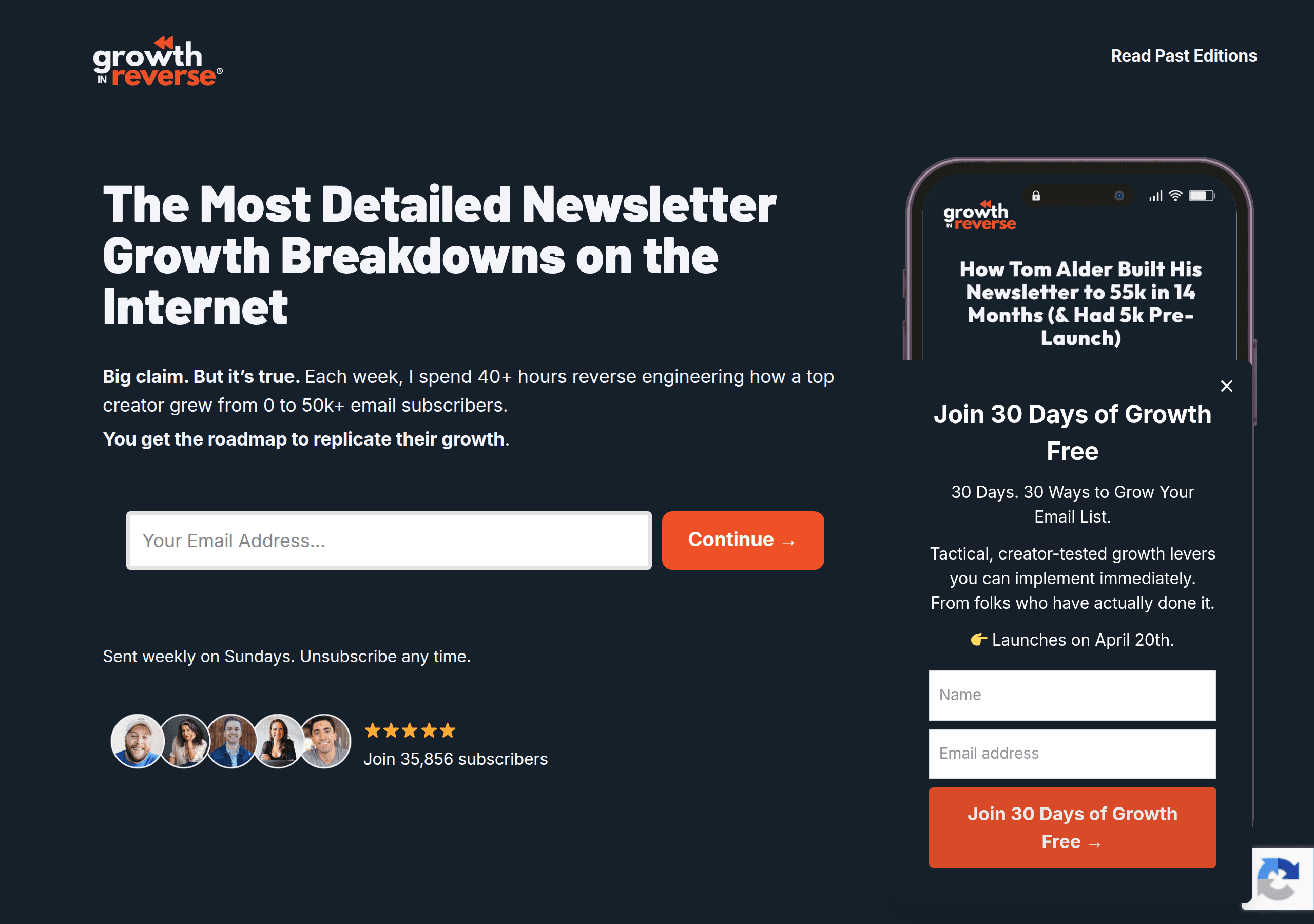
Chenell Basilio grew Growth In Reverse to 30,000+ subscribers by doing one thing exceptionally well: deep, forensic teardowns of how newsletters and creators hit 50K+ subscribers. Each issue is a hours-of-research breakdown of one person's growth playbook.
It's niche — it's about audience growth specifically — but for indie hackers whose bottleneck is "who will see it," it's the single best resource on the list.
Pricing: Free, 30K+ subscribers.
Best for: Builders growing a newsletter, audience, or content engine who want copy-able tactics.
Watch out: Laser-focused on audience growth — not much on product, pricing, or ops.
8. Just Ship It — the speed-obsessed maker's diary🚀
The mindset newsletter for shipping small products fast — from a guy who runs 15 of them.
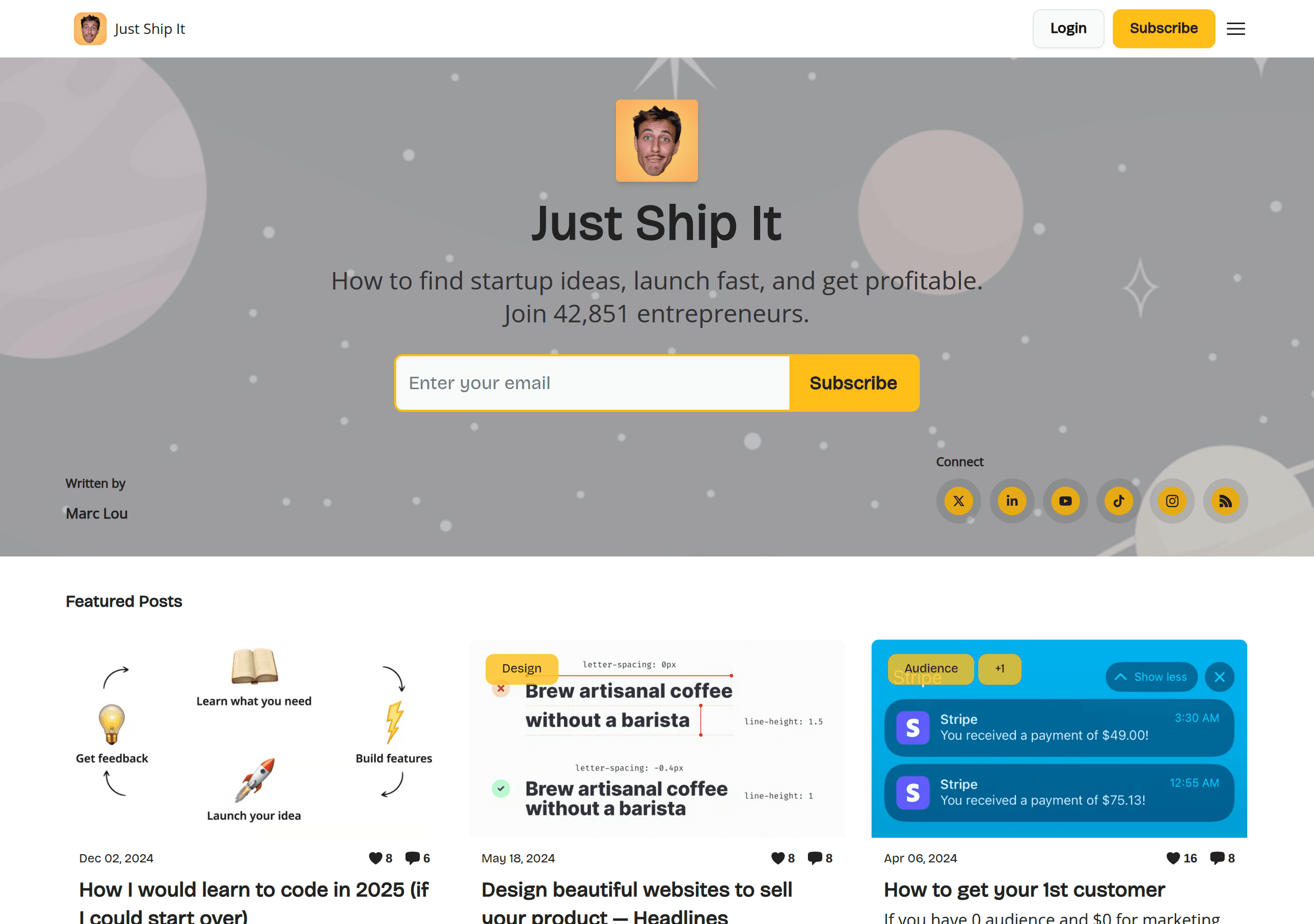
Marc Lou makes ~$85K/month across 15 tiny startups (ShipFast, CodeFast, DataFast, and more), and Just Ship It is his running commentary on finding ideas, launching quickly, and staying profitable solo. He shared he made over $1M in 2025 — and shows the receipts.
It's motivational and tactical in equal measure. If you suffer from idea paralysis and over-polishing, Marc's whole thesis is the antidote: ship, then iterate.
Pricing: Free, 42,000+ subscribers.
Best for: Developers who can build but keep stalling before launch — the "just ship" kick in newsletter form.
Watch out: The ship-15-products approach is Marc's model; it isn't the only path, and it doesn't suit everyone.
Which one should YOU pick?🎯
Don't subscribe to all eight on day one — you'll drown. Start with one or two matched to where you're stuck:
- Just starting, want proof + a plan → Superframeworks (case studies with the real numbers).
- Don't know what to build → Trends.vc + Starter Story (markets and proven examples).
- Can build, can't get users → Growth In Reverse (audience teardowns).
- Keep stalling before launch → Just Ship It (the kick you need).
- Want the mindset + community → The Bootstrapped Founder + Indie Hackers.
- Want to avoid rookie mistakes → Failory (learn from the graveyard).
Two well-chosen newsletters you actually read beat twenty you archive. Pick, subscribe, and protect your inbox.
Want the full archive of older favorites too? Here's our earlier roundup of business newsletters for more.
FAQ🙋
What's the best newsletter for indie hackers in 2026?
Superframeworks is the top pick — it publishes deep, research-driven case studies of how solo founders reached real revenue, with the growth channels and numbers shown, written specifically for indie hackers on limited budgets. The Bootstrapped Founder and Indie Hackers are strong runners-up.
Are there good free newsletters for indie hackers?
Yes — most of the best ones are completely free. Superframeworks, The Bootstrapped Founder, Indie Hackers, Failory, Growth In Reverse, and Just Ship It all cost nothing to subscribe.
What's the cheapest way to get high-quality market research?
Trends.vc has a free tier with a few reports each month. If you want the full archive and community, Trends Pro starts at $20/month (or $699/year for full membership) as of July 2026 — still cheap next to hiring a researcher.
How many newsletters should an indie hacker subscribe to?
Two or three you actually read beats a dozen you archive. Pick based on your current bottleneck — ideas, users, or execution — and add more only once the first ones become a habit.
Thank you for reading🙏
Every week I break down how real indie hackers build profitable internet businesses — the newsletter continues at Superframeworks.
Join here for weekly case studies and frameworks.
Cheers,
Ayush