
The First 100 Users Playbook
You are not the hero of your startup (Your user is!) Getting paying customers for a product is tough. Building something worth paying for comes down to solving…
 Ayush Chaturvedi19 min read
You are not the hero of your startup (Your user is!)
Getting paying customers for a product is tough.
Building something worth paying for comes down to solving burning problems for users.
And going out and spreading word about the solution you built.
This playbook is about the various strategies you can use to get the first 100 paying customers for your startup.
But before we begin, it’s good to know that every strategy discussed here ultimately boils down to a simple piece of advice from investor Paul Graham:
“Do things that don’t scale.”
There are common patterns that keep coming back when we study the success of solo founders and Indie Hackers.
They all deploy the same strategies when doing things that don’t scale.
This playbook is a collection of all of these strategies with examples that you can learn from and apply to your own startup journey.
By definition, the term “solo founder” means a single person starting a business. But this playbook can also be applied to small scrappy teams of 2 or 3 founders.
Before we begin, there are a few pre-requisites you need to be aware of, these strategies can work only when your startup is already pas the “raw idea” phase.
🏁 Pre-requisites
- You have some sort of MVP and initial set of users(5-10)
- You know “what” the product is, core set of features, what problems you’re solving.
- You know your competition
- There is a minimal user interface of the actual product.
- It’s clear who the product is NOT for. People can self select out of your product when they look at your landing page.
⭐ About the Landing Page
- Have a Landing page 😅 (build it on Carrd or ConvertKit if you don’t want to code it just yet)
- Highlight the benefits and features.
- Have a way to collect email signups and/or payments. (At least waitlist emails, if nothing else)
- Some screenshots, videos, GIFs, early Testimonials of the product.
- Persuasive and clear copy.
If you need help in any of these aspects, I highly recommend checking out the first 3 steps of The Solo Founder Playbook.
The 6 strategies discussed in this playbook are:
- Direct Sales 🗣️
- Personal Branding 😎
- Product Listing Platforms 📃
- QnA Content Marketing ✍️
- Side Project Marketing ⚒️
- Pay Per Click Ads 💰
Each strategy is discussed with specific examples and case studies.
Now let’s go 👇
Direct Sales
1. Direct Sales 🗣️
“Great salespeople are relationship builders, who provide value and help their customers win” - Jeffrey Gitomer
This is the big one.
Direct sales means that you speak to a customer directly, either on call, or in person. Explain the value proposition of the product to them and try to get a buy order from them. Either during or after the conversation.
This has been the most common form of sales for all kinds of businesses for decades, not just tech startups.
But it works very well for early stage startups as well.
Every successful startup has to indulge in the direct sales at some point in their journey.
Even highly mature companies do direct sales when it comes to enterprise customers, because they offer them a high ticket subscription.
But even if you don’t have a high ticket subscription, very early on, doing direct sales is the best way to get paying customers. This is also forms the basis of many other strategies discussed later.
Benefits of direct sales:
- High touch experience with customers, learn about their objections from right up close.
- Easier to explain the benefits of the product, as compared to a self serving landing page.
- Gain rich customer insights with every interview, which improves the next conversation.
Problems with direct sales:
- “Sales” has a bad reputation, so it’s difficult to get people on calls.
- Tough to ask the right questions that lead to sales without sounding “salesy”, it’s an acquired skill.
- Hard to pull off if you’re an introverted founder 😅
Steps to perform Direct Sales 🪜
- Narrow down your niche, have a very specific user persona.
- Make a list of people who will be the ideal users for your products.
- Reach out to them via E-mail or Direct Messages on social media. There are various methods of reaching out:
- Cold Outreach - You just send an email or direct message to someone who has no idea you exist.
- Warm Outreach - You reach out to someone who is in your network, who possibly knows about your past work and current projects.
- Community Outreach - You are an active member of a community and your product serves that community. You can post on a forum that you are looking to speak to people, and let users reach out to you.
- Warm Community Outreach - Another way of doing this is to reach out to specific people in the community who have already expressed the problems your product solves.
- Send them a personal message, asking about their frustrations in their current arrangement, and mention that your product can possibly solve them. But it’s not a hard sell, you are looking for ways to improve the product so it can serve them better.
- Offer a free gift card or offer to pay people for their time to get on a call with you. (But be mindful, you don’t want people who are just looking for freebies.)
- Mention existing users if you have some renowned people in the domain using your product.
- Get on a call with them, ask about their problems, explain how your product solves them, and share your future roadmap.
- Remove their biggest objections. (Nathan Barry manually ported customers email lists and automations in the early days of ConvertKit.)
Examples of Direct Sales 👀
Zapier’s 1st customer.
Back in 2011, Zapier’s founders had a barely functioning prototype but no clue what people wanted.
Their idea was basic, that there should be integrations between web apps.
But they didn’t know who will actually use it.
So they started browsing SaaS service forums and finding integration opportunities.
They also Googled web app combination names to see if people had asked these questions in some communities.
During 1 such Google search, Wade Foster, the CEO of Zapier found a request about a possible integration between PayPal and Highrise.
The request was made on the “Web Apps” StackExchange. And it was made by none other than startup veteran Andrew Warner, host of the Mixergy podcast.
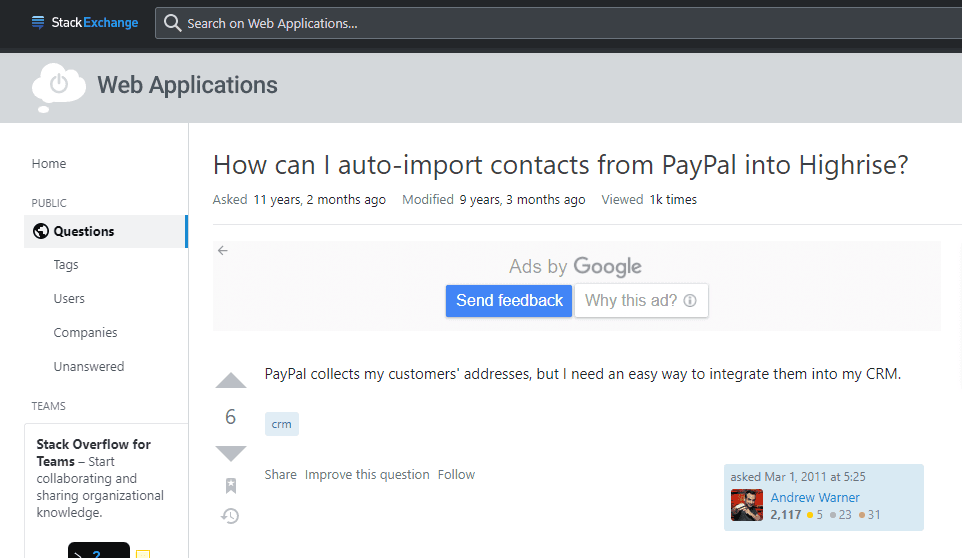
Wade foster found this request 8 months late.
But he still cold emailed Andrew asking if he faced the same issue even today?
Andrew had actually found a solution to the original problem, but he was intrigued about Wade’s solution. After which Wade explained the concept of Zapier to Andrew.
Andrew needed a Wufoo and AWeber integration, which the Zapier team built after the request. Within a few days Andrew got the solution to his problem, and paid out the $100 fee to join Zapier’s beta.
And then, he tweeted about it -
Andrew Warner
@AndrewWarner
I just paid http://t.co/gxbUjs0E $100 for a product it didn't even launch because @WadeFoster nailed what I was DESPERATE for.View on X →
After this, the Zapier team helped Andrew setup his integration, they did Skype calls, even built some features specifically for him.
Of course, this is not a repeatable process. But doing 1:1 sales like this teaches you a lot about your ideal customers.
This is a classic example of doing things that don’t scale.
- Read the complete story on Zapier’s blog.
- Stackexchange question that started it all.
ConvertKit’s story of getting Unstuck
ConvertKit was stuck at $1500 MRR after it’s first year. It wasn’t getting new customers, their CEO Nathan Barry had tried everything - Content Marketing, Webinars, Partnerships.
But nothing worked.
Eventually, he found a break through via Direct Sales, and grew to almost $100K MRR over the next year.
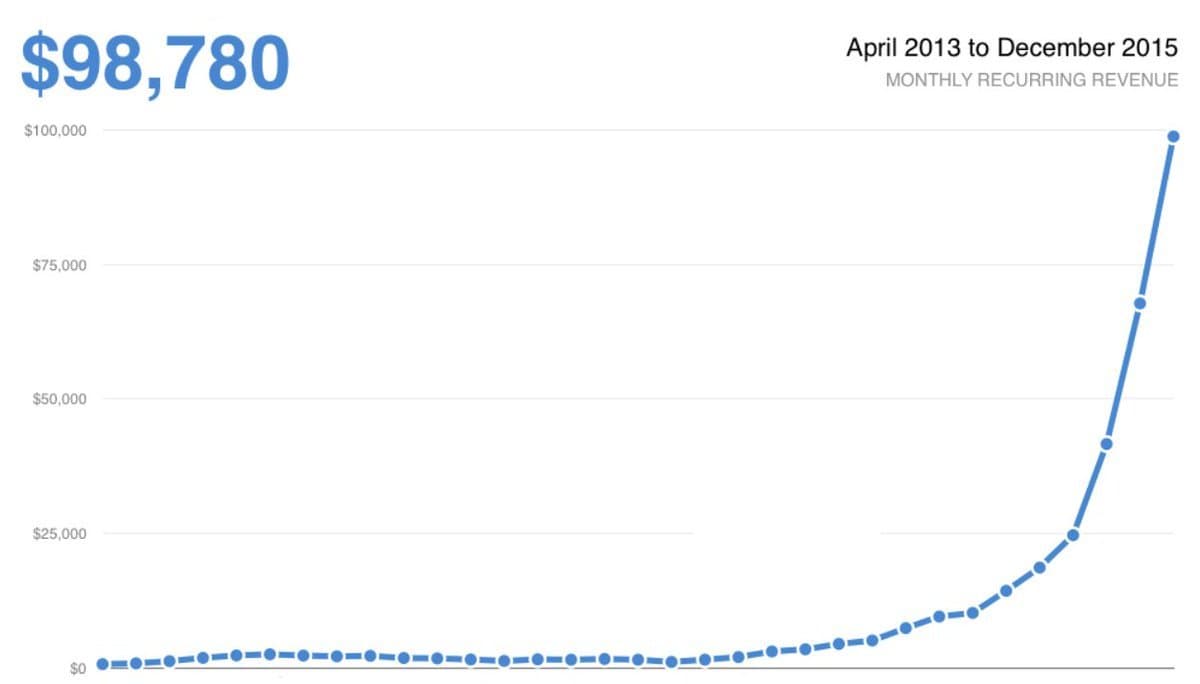
Read the exact strategy that Nathan Barry used in this thread:
Nathan Barry 🇺🇦
@nathanbarry
My SaaS business hit $1,500 MRR and then got stuck.View on X →
Until I learned an important trick…
Here’s the exact method I used to scale to $100k MRR in the next 12 months: pic.twitter.com/yqcNUYC5KP
Tuple’s Pre-Sales Magic
Ben Orentstein of Tuple did more than $8000 in sales before they even had a product.
All through direct sales- explaining the value proposition to users, and getting them to pay for the product.
Ben tested various pricing points ranging from $149/ month to $599/month during every conversation. Every early user got a different price.
Each conversation was a signal to the correct price point for Ben.
Eventually they zeroed in on 1 price, but they had already done $20K in sales by then.
Read the complete story of Tuple in a previous issue of ListenUp IH:
$8,000 in revenue without even a product 💸| Tuple
The story of remote pair programming app Tuple and it’s founder Ben Orenstein. How they built a successful bootstrapped startup.
 Listen Up IH· Ayush Chaturvedi
Personal Branding
2. Personal Branding 😎
“People buy from other people, not from brands”
Personal Branding means actively building an audience on a platform like Twitter, LinkedIn or Instagram, and then leveraging that audience to get traction for your product.
Your audience members become the users of your product and have no hesitation in paying you because they trust you already.
Benefits of Personal Branding:
- Direct connection with your users.
- Your audience stays on for all your future projects, not just your current startup.
- Easier to spread the word out about your startup for free.
Problems with Personal Branding:
- You have to become a content creator and produce high quality content for a long period of time.
- You are the mercy of the platform you’re building your personal brand on.
- Tough for introverts to pull of, still easier than direct sales.
If your product is a tool that helps creators on a particular social media platform then it makes even more sense to invest time and effort in building a personal brand on that platform.
- You struggle with the problems of your ideal users yourself every day. Gives you better user insight.
- Once you have an audience, you are perceived as an authority on the topic, it becomes easier to get new customers for your product.
- You can figure out the next features you want to build just by polling your audience.
Steps to build a personal brand 🪜
(For text heavy platforms like Twitter and LinkedIn)
- Make a list of influential accounts in your niche.
- Engage with their content every day. You will find your initial followers in the comments/replies of their posts.
- Showcase your expertise in your content. Try to add value to someone 2 steps behind you.
- You can also “build in public” and share the ups and downs of your startup journey.
- But, that is a great way to get supporters, not necessarily users for your product. Always be mindful of that.
- With time and effort, you will be able to build an engaged audience on either platform.
Go deeper:
If you want more guidance on Twitter, then do check out my book - 7 Habits of Highly Effective Tweeple - The Wisdom Of Twitter.
For LinkedIn, I highly recommend getting this course from Justin Welsh - The LinkedIn OS.
For Instagram and TikTok the algorithms are highly unpredictable.
But the best strategy is to catch viral trends on the platform, and create highly engaging video content.
This will definitely get you plenty of impressions, that way you can drive that traffic to your product’s website.
But for all cases, it makes sense to collect emails and run an email newsletter. Ultimately you want to own the audience you build. Not just rent it on other platforms.
Examples of Personal Branding 👀
- Jon Yongfook from Bannerbear actively builds in public as well.
- He writes blog posts after reaching significant goals in his startup journey.
- And regularly posts Tweets about the day to day wins and losses of his business.
- He even has an “open” page where he shares all the raw numbers of his startups for everyone to see.
Read more about Jon and Bannerbear in a previous issue of Listen Up IH:
Living The Indie Hacker Dream | Jon Yongfook
Listen Up! IH – Episode 19 “If you want to go from 0 to $10K MRR you should divide your time 50:50 betweencoding and marketing”That’s Jon Yongfook’s advice for Indie Hackers. Jon [https://twitter.com/yongfook] is the founder of Bannerbear[https://www.bannerbear.com/]. Bannerbear
Listen Up IH· Ayush Chaturvedi
- People like Pieter Levels and Andrey Azimov have gained significant audience by doing the 12 startups in 12 months challenge.
- This audience eventually became the initial user base for their break out startups.
- Read more about them:
The Hardcore Year approach to $10K MRR💪 | Andrey Azimov
Listen Up! IH - Episode 25 “Just start a simple one-button app, whatever your idea is.”👆 That’s Andrey Azimov’s advice to aspiring Indie Hackers. Andrey [https://twitter.com/AndreyAzimov] is the the founder of Sheet2Site.com[http://sheet2site.com/], Chart2Site.com [http://chart2site.com/], MacB…
Listen Up IH· Ayush Chaturvedi
Digital Nomad To Prolific Indie Hacker | Pieter Levels 🧳
Listen Up! IH – Episode 20 “Be less scared and just do more things!”That’s Pieter Levels [https://twitter.com/levelsio] advice for aspiring IndieHackers. Pieter is the founder of a number of different solo companies, the most notablebeing nomadlist.com [http://nomadlist.com/] and remoteok.io[h…
Listen Up IH· Ayush Chaturvedi
- Tony Dinh is the founder of the Twitter tool Black Magic.
- He actively talks about his development process and his startup on Twitter every day.
- He actively builds in public and has gained a lot of traction for his product because of it.
View on X →Tony Dinh 🎯
@tdinh_me
Product Listing Platforms
3. Product Listing Platforms 📃
Platforms such as Product Hunt and BetaList are great places to find initial users for your startup.
It’s where early adopters hangout, actively looking for new products to test.
These early adopters will end up becoming your paying customers as well.
Benefits of listing on platforms:
- Free eyeballs to your product.
- Backlinks, good for long term Search Engine Optimization.
- Can keep launching with every new version and get fresh traffic
Problems with listing on platforms:
- Every platform has it’s own strategy and best practices.
- For many products, your ideal audience may not visit these platforms and you will end up attracting the wrong audience, leading to inaccurate insights.
- Many platforms charge a fee to boost your post, may not be a worth it in some cases.
List of platforms to post your product:
- Product Hunt - This is a good checklist for PH launch.
- BetaList - 50 examples of founders who found success via Betalist.
- AppSumo - Best if you’re offering a life time deal in your early days. This is a good guide for Appsumo.
- Show HN: HackerNews is a great place where tech enthusiasts hang out every day. This is also where Sahil Lavingia first launched Gumroad.
- Read Sahil’s “Show HN” post from back in April 2011.
- Sahil’s full story of Gumroad
- Data backed guide to launching on HN.
Read more:
Relaunch like a pro: 100+ places to launch, relaunch, and list your product
Examples of Launching on Product List Platforms 👀
- NomadList by Pieter Levels was number 1 on Product Hunt and HackerNews on the same day. Read his blog post from 2014:
- How I got my startup to #1 on both Product Hunt and Hacker News by accident
- Muntasir Rashid launched Postpace 50 times in 6 months, and eventually made $146K in revenue.
- Mostly from 1 time payments though, not recurring revenue.
- Read his story:
- 180 days of growth — from 0 to $146k revenue without any funding
- Bram Kanstein pre-launched his NoCode course and got 2500+ subscribers on a waitlist from platforms like Betalist, Reddit, Twitter and LinkedIn.
- IH post from Bram Kanstein about NoCodeMVP
- Complete story of Bram Kanstein and his products - Startupstash and NoCodeMVP:
How To Validate Startup Ideas Without Code | Lessons From Bram Kanstein
Listen Up, IH! — Episode 14 > “I truly believe that if you deliver real value and solve someone’s problem,they don’t care how you do it.”That’s Bram Kanstein’s insight after working with hundreds of early stagestartups over the years. Bram [https://twitter.com/bramk] is
Listen Up IH· Ayush Chaturvedi
QnA Content Marketing
4. QnA Content Marketing ✍️
Broadly Content marketing is a strategy to create content across social media channels and blog posts to spread awareness about your product.
It also includes personal branding and SEO optimized blogs.
But for this section, our focus is on creating content for Question and n Answer platforms such as Reddit and Quora - QNA based Content Marketing.
In this strategy you focus on the audience questions in your niche on platforms such as Quora and Reddit, provide value to the audience there, and eventually bring traffic to your site.
Benefits of QnA content marketing:
- You get targeted audience, instead of creating content in the void on social media platforms, here you are answering specific questions in your niche.
- Create once and get traffic forever. The answers on these platforms keep generating traffic for a long time, especially if the questions are timeless, then new people will keep coming to these questions in the future, and discover your answers.
Problems with QnA content marketing:
- It’s a lot of manual effort, can eat up a lot of your time and energy.
- Forums and communities are smart about self promotion, and they are aware of this strategy. So the moment you sound too self promotional, you run the risk of getting banned.
- It’s hard to find interesting questions that you can answer directly. May not work for every product or niche.
Examples of QnA Content Marketing 👀
Veed’s founder Sabba Keynejad used to answer questions on Quora and Reddit all day, and he promoted Veed in all his answers.
He wrote 10 answers a day and got 20 people to click on those answers - that’s 200 people coming to his site every day.
This was huge in the initial days of the video editing startup.
- Checkout Sabba’s Quora profile for all answers related to Video editing and how he promoted VEED through them.
- Read Veed's complete story:
Rock Bottom To Rocket Ship🚀 | How Veed Grew To $5M+ ARR
Listen Up! IH – Episode 24 “Keep pushing, and make something people search for”That’s Sabba Keynejad’s message to Indie Hackers. Sabba [https://twitter.com/sab8a] is the Co-founder of Veed.io [http://veed.io/] – a browser-based video editing tool. Sabba and his co-founder Tim grew the company f…
Listen Up IH· Ayush Chaturvedi
Jason Lmkin is the founder of the SaaS conference SaaStr.
He’s been writing on Quora since 2010, and is a thought leader in the SaaS startups niche.
- Checkout Jason’s Quora answers and how he’s used his profile to drive traffic to his conference.
Side Project Marketing
5. Side Project Marketing ⚒️
Also known as “Engineering as Marketing” , this is where you build small side products that help you attract new users to your main product.
Instead of creating content, you are building products.
Benefits of Side Project Marketing:
- You’re offering free value, so everyone will love you, don’t have to sound “salesy”
- Easier to build if you’re a developer-founder.
- Can get many backlinks and traffic over time if the side project is useful/funny/interesting. So it’s good for SEO in the long term, and has the potential to go viral in the short term.
Problems with Side Project Marketing:
- An extra product that you have to build, so more engineering time.
- No revenue product, it only brings traffic, not necessarily paying users.
Every growth strategy we’ve discussed so far can be, and should be used to promote your side projects as well.
But since it’s a free product so you will find more acceptance on every channel.
Your eventual goal is to get people on an email list and own the traffic you get. And then promote your product to them via email marketing or direct sales.
Examples of Side Project Marketing 👀
- Veed has built 147 free video related tools.
- Starterstory built a “how to say no in 31 situations” template pack that went viral on HackerNews and Product Hunt.
- Kapwing built Cartoonify
- Llama life build Shhnoise and Fidgetpage
Read a deep dive on Side Project Marketing on the Failory blog:
Side Project Marketing: What Is It & How to Do It (+10 Examples)
PPC Advertising
6. PPC Advertising 💰
PPC stands for “Pay Per Click”.
This is where you pay companies like Facebook and Google to bring traffic to your website. You run ads on their platform, and they charge you money for each click that they send.
Hence the name PPC.
It may not be obvious, but PPC ads are a good way to test out ideas and to get initial set of customers. Especially if you don’t have other ways to driving free traffic to your website.
With a small budget, and targeted keywords you can bring decent traffic on your site and funnel in interested people who can become your ideal users.
Benefits of PPC ads:
- Can get traffic on your site quickly.
- Can validate ad and landing page copy based on how people respond to them.
- Figure out your customer acquisition cost early on in the product lifecycle.
Problems with PPC ads:
- You need a polished landing page with a clear value proposition, high quality copy.
- You need a marketing funnel. People won’t buy from you the 1st time they come on your landing page, so you need them to give you there email address and funnel them in a sequence of emails that educates them about the product. Eventually you can ask them to buy the product or get them on a direct sales call.
- You need to spend money. Not a lot, $100-$500 is enough in the beginning.
Steps to run PPC Ads🪜
For Google Ads.
- Build out your landing page and marketing funnel.
- Figure out your ideal user demographic - age, gender, country, interests.
- Do keyword research using tools like Google Keyword planner or Ahrefs.
- Prepare 2-3 versions of your ad - title and subtitle copy, landing page URLs.
- Set a daily budget - $20-$30. And a max cost per click budget.
- Run your ads and measure how much it costs to get each conversion (email signup)
For detailed steps and insights - check out this free course on Google Ads by Simplilearn -
Complete Google AdWords Professional
You can also go with Facebook/Instagram ads and the steps would be similar, but Google searches have higher buying intent.
On Google, people are actively looking to solve a problem, and your website appears at the top of the results page as a solution to that problem, you have a higher chance of finding buyers from Google Ads.
Examples of PPC Ads 👀
- Foti Panagiotakopoulos of GrowthMentor validated his idea with just $500 in PPC spend. Read his story:
- How to validate a startup idea using a pre-launch landing page and less than $500 in PPC spend
- Molly Wolchansky of The Agent Nest used Instagram ads to reach out to her potential customers - Real Estate Agents.
- Read Molly’s story in a previous issue of Listen Up IH:
Freelancer’s path to building a SaaS with $10K MRR 🏡| Agent Nest
“Tell yourself - I can do this and I WILL do this. Just focus on your business,focus on what you care about.”👆 That’s Molly Wolchansky’s advice to Indie Hackers who want to get to $10K MRRwith their business. Molly [https://www.indiehackers.com/Theagentnest] is the founder of
Listen Up IH· Ayush Chaturvedi
Conclusion:
These are common patterns observed in most success stories of Solo founders and Indie Hackers.
Your journey might differ, the channels that work for you might differ, but the goal of this guide is to help you decide which strategy is right for you. Not to promote any specific strategy.
You can try out every channel, but as a solo founder you run the risk of burning out quickly.
So it’s best to focus on 1 channel for a 3 month period, give it your best shot, see the results and then move on to the next one if you’re not satisfied.
But 2 things you must always keep in mind - You are not the hero of your startup, your user is, so every decision should be based on that.
And to get those first 100 users, you will have to do things that don’t scale.
Thanks 🙏
Read more:
- How the biggest consumer apps got their first 1,000 users | Lenny Rachitsky
- How We Got Our First 100 Paying Customers in 24 Hours | Groove
The tweet where this report started:
Ayush 🙏
@ayushtweetshere
I'm writing a post about getting the first 100 users for your startup.View on X →
What is your best advice, insights, stories to get initial users?
Any cool blogs, podcasts or videos that you know about on the topic?